


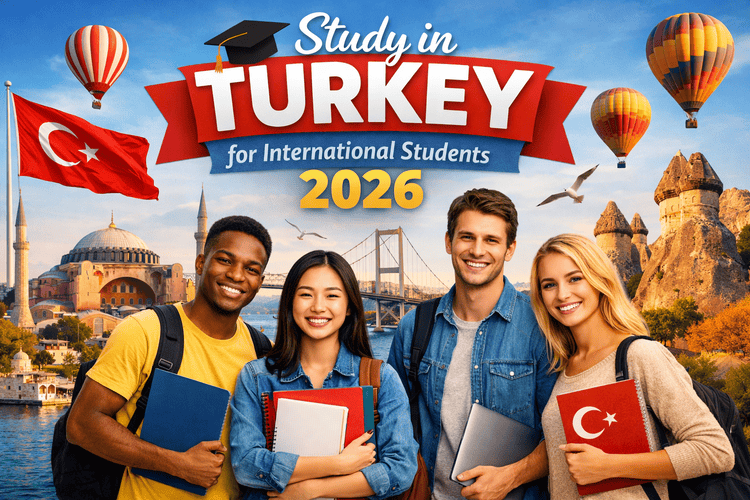
Study in Turkey for International Students in 2026
Turkey has rapidly become one of the most preferred higher education destinations for international students. Every year, students from the Middle East, Africa, Central Asia, and the Balkans choose Turkish universities because they offer internationally recognized degrees, affordable tuition fees, and English-taught programs.
Compared to Europe and North America, studying in Turkey provides a unique advantage: students can receive quality education while keeping both tuition and living costs manageable. This guide explains everything international students need to know about studying in Turkey in 2026, including admission requirements, fees, scholarships, residence permits, and student life.
Why Study in Turkey?
Turkey follows the Bologna education system, meaning university diplomas are recognized in Europe and many other countries. Turkish universities also cooperate with hundreds of international institutions through exchange programs.
Key advantages:
Affordable tuition fees
English-taught programs
Modern campuses and laboratories
Multicultural environment
Easier admission process than most EU countries
Strategic location between Europe and Asia
Turkey currently hosts more than 300,000 international students from over 190 countries, and this number continues to grow every year.
Admission Requirements for International Students
Admission to Turkish private universities is relatively straightforward compared to many European countries.
Required documents usually include:
High school diploma (translated)
Transcript
Passport copy
Biometric photo
Language certificate (if available)
Students who do not have an English certificate can take the university’s placement exam after arrival.
Study in Turkey Without IELTS or SAT
One of the biggest advantages of Turkish universities is flexible admission criteria. Many universities do not require IELTS or SAT scores.
Students can:
Take an English placement exam at the university
Study one year in a preparatory English program if needed
Because of this system, Turkey is considered one of the easiest countries to start university education abroad.
Tuition Fees in Turkey
Tuition fees depend on the program and university.
Average annual tuition fees:
Business & Social Sciences: $2,500 – $5,000
Engineering: $3,000 – $7,000
Dentistry: $12,000 – $20,000
Medicine: $15,000 – $30,000
Even medical programs in Turkey are significantly cheaper than Europe, the UK, or the United States.
Recommended university option: Belek University (https://studytr.com/belek-universitesi.html) (see programs and admission details here).
Cost of Living in Turkey
The monthly living cost for a student in Turkey is affordable compared to most study destinations.
Typical monthly expenses:
Accommodation
Food
Transportation
Internet and personal expenses
Students generally spend $400–$700 per month depending on the city and lifestyle.
(For a detailed breakdown, see our Cost of Living in Turkey for International Students guide.)
Scholarships for International Students
Several scholarship opportunities are available:
Türkiye Scholarships (government scholarship)
University discounts
Merit-based scholarships
Partial tuition fee reductions
Some students can receive up to 25%–50% tuition discounts depending on academic performance.
Best Cities to Study in Turkey
Different cities offer different lifestyles and budgets.
Istanbul – largest academic hub, many universities
Ankara – capital city with balanced student life
Antalya – coastal city popular among international students
Izmir – modern social environment
Konya, Karabük, Trabzon – lowest living costs
Choosing the right city is almost as important as choosing the university.
Student Residence Permit in Turkey
After arriving in Turkey, international students must apply for a student residence permit. Universities usually assist students during this process.
Steps:
University registration
Health insurance
Online residence application
Immigration office appointment
The permit allows legal residence during the entire study period.
Can International Students Work in Turkey?
International students may work part-time after the first academic year, depending on regulations and university approval.
Common student jobs:
Translation and interpretation
Tourism sector
Digital freelancing
Campus administrative offices
Apply to Turkish Universities
Our consultancy supports students throughout the entire application process:
University selection
Application submission
Admission letter
Airport reception
Residence permit assistance
Accommodation support
Contact us to receive a free consultation and find the most suitable university and program for your academic goals.